
Participants of the
Tukino 2026 festival

writer
Eva Danišová
As a teenager, she already experimented with writing both prose and poetry. She began writing more systematically in the 1990s, after completing a journalism course and subsequently meeting Milena Hübschmannová and Romani studies scholars from Charles University. During this period, she also began translating into Romani for the magazine Romano gendalos, and later for Romano Voďi, for which she continues to translate to this day. In 2017, she received the Milena Hübschmannová Award in recognition of her contributions to the Romani language. She believes that literature recognised and respected by mainstream society can help improve perceptions of Romani people, and this is the principal purpose of her writing.

writer
Ilona Ferková
She began writing stories she knew from the accounts of her parents and acquaintances. They wanted her to write these stories in Romani, and her friend Milena Hübschmannová helped her with this, offering her encouragement and support in every aspect of her writing. Through her literary work, she has always sought to foster mutual understanding between Roma and Czechs, while also preserving the Romani language and culture for future generations.
In the 1990s, she published two collections of short stories: Mosarďa peske dživipen anglo love (She Ruined Her Life for Money) and Čorde čhave (Stolen Children). In 2018, she published another bilingual collection of short stories, Ještě jedno, Lído! Kaštánkovy příběhy z herny (One More, Lída! Kaštánek’s Stories from the Gaming Room).

Editor, presenter, writer
Rena Helmer
s he has worked as a freelance editor and presenter for Czech Radio since 2005. She has also collaborated with the HateFree Culture and Romea.cz platforms, as well as the Slovo 21 organization.
She began her literary career in 2018 with the short story Já si vybral tebe (I Chose You), published in the collection O mulo! Povídky o duchách zemřelých (O Mulo! Stories About the Spirits of the Dead). Her story Hej tu! / Hej Ty! was published in the anthology Amare ternenge – Romští autoři píšou pro mladé (For Our Young People – Roma Authors Write for Young Readers). Her autobiographical childhood memoir Výbuch v Nuslích (The Explosion in Nusle) was included in the collection Všude samá krása (Beauty All Around), while her short story Ma rov, mro čho, ma rov was featured in the anthology Fameľija nadevše (Family Above All).
As a journalist, she has always had a close relationship with the written word. For her, literary writing is a natural continuation of her commitment to giving a voice to those who too often go unheard.

writer and editor-in-chief of the REM Civic Press Agency
Mária Hušová
she began writing down stories she had heard from her parents and acquaintances. They wanted her to write them in Romani, and her friend Milena Hübschmannová helped her with this, offering her encouragement and support in every aspect of her writing. Through her literary work, she has always sought to foster mutual understanding between Roma and Czechs, while also preserving the Romani language and Roma culture for future generations.
In the 1990s, she published two short-story collections: Mosarďa peske dživipen anglo love (She Ruined Her Life for Money) and Čorde čhave (Stolen Children). In 2018, she published another bilingual short-story collection, Ještě jedno, Lído! Kaštánkovy příběhy z herny (One More, Lída! Kaštánek’s Stories from the Gambling Hall).
Among her favourite works are the childhood story Sar amen phirahas andre mozi (How We Used to Go to the Cinema), from the anthology Všude samá krása (Beauty All Around), and the story Baletka (The Ballerina), from the collection Fameľija nadevše (Family Above All). However, she is most proud of her book for young readers, AMEN.
What brings her the greatest joy is being able to breathe life and soul into each character, making them so vivid and relatable that readers can truly identify with them.

lecturer, Romani studies scholar, writer
Iveta Kokyová
she began writing her first verses and rhymes while still in primary school. Later, in secondary school, under the guidance of Romani studies scholar Hana Syslová, she discovered the magic of literary writing in two languages. Bilingualism became a natural means of expression for her, as well as a bridge connecting the two worlds that have shaped her. She works as an educational programme instructor for the Nová škola organization, conducts academic work at Charles University, contributes to the development of an online Romani-Slovak dictionary supported by the Kesaj Good Romani Fairy Foundation, and is a member of the Czech PEN Club. Her prose and poetry have appeared in anthologies such as Samet blues, Slunce zapadá už ráno (The Sun Sets in the Morning), and Čhajorki. She has also published in magazines and publications including Romano voďi, Respekt, and Babylon, among others.
For her, writing is both a form of therapy and a way to reach readers through shared experiences.

student, author
Nina Dudy-Koťová
Božena Gunárová comes from the Dudy-Koť family and has been writing and telling stories since her early teens. She was drawn to writing not only by a natural desire to capture her own stories and experiences, but also by a promise she made to her grandfather. She graduated from a secondary school specialising in social care, where she gained deeper insight into human relationships, behaviour, and psychology. During her studies, she also completed a media course organised by ROMEA, which further strengthened her interest in writing and storytelling. She subsequently studied theatre and film studies in Olomouc and is currently studying Romani studies in Prague.
Her work explores human stories, emotions, and the experiences of others. For her, writing is a way to record her own inner world while also sensitively exploring the lives of those around her. She brings empathy, openness, and an interest in diverse perspectives to her work, and hopes to devote herself fully to artistic and literary creation in the future.

dramaturge, playwright, director
Ondřej Elbel
dramaturg, playwright, and director with 15 years of experience in theatre, including more than 40 productions as a director and nearly 20 original plays staged. Following a successful career in theatre, he moved into television, writing several screenplays and working for eight years as a dramaturg and creative producer for TV Nova, Voyo, and Oneplay.
His television credits include series such as Jedna rodina, Profesor T., Gumy, Co ste hasiči, Ulice, Ordinace v růžové zahradě 2, Anatomie života, and Specialisté.

researcher, Author, Editor
Alice Koubová
Alice Koubová is a senior research fellow at the Institute of Philosophy of the Czech Academy of Sciences and has been teaching at the Academy of Performing Arts in Prague (AMU) for many years. She has lectured and collaborated with numerous academic institutions abroad, including the University of Halifax, Uppsala University, Lund University, the University of Freiburg, the University of Giessen, the University of Wuppertal, the University of Helsinki, the University of Zurich, the University of Vienna, the Collège de France, and the Fondation Maison des Sciences de l’Homme (FMSH) in Paris, as well as with cultural institutions in the Czech Republic and Slovakia. Her research focuses on social resilience, the philosophy of life, and artistic research. She is the author and editor of several monographs and more than a hundred publications, and has co-created a series of participatory workshops and theatre performances.

sociologist, writer, journalist
Fedor Gál
Fedor Gál is a sociologist, writer, and publicist. He was born in the Theresienstadt ghetto, an experience that profoundly shaped the themes he has explored throughout his life, particularly Holocaust remembrance, antisemitism, and minority rights. In November 1989, he was one of the founders of the Public Against Violence (VPN) movement, which played a leading role in the collapse of the communist regime in Slovakia. He became one of the prominent figures of the Velvet Revolution. After leaving active politics, he moved to Prague, where he founded the GplusG publishing house with his son Robert. He also contributed to the establishment of TV Nova while continuing his sociological research and literary work.
He has also made a significant contribution to documentary filmmaking, both as an author and as the central figure in his own documentary projects. These include Krátká dlouhá cesta (A Short Long Journey) and a documentary about Natálka, a young girl who was nearly burned to death in an arson attack motivated by racial hatred in Budišov.
director of REF, head of the REF Slovakia Office
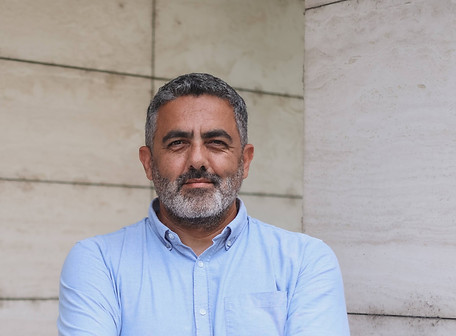
Stano Daniel
is the Director of Roma Education Fund Slovakia and heads the organisation’s Slovak office. The office is part of an international network working to improve educational outcomes for Romani children and young people in Slovakia, Romania, Serbia, and North Macedonia. His work focuses on project financing and implementation, policy advocacy, evaluation, and strategic planning. At the international level, he also coordinates colleagues across these countries within a strategic pillar designed to complement formal school education.
This complementary approach to education is rooted in the belief that culture and the arts—whether expressed through audiovisual media or other creative forms—play a key role in shaping Romani identity. Stano pursues these interests beyond his main professional responsibilities: he is a member of the programming council of Tuke.TV, occasionally contributes interviews with notable Romani personalities to Romani media, and serves on one of the expert committees of Slovakia’s state Fund for the Support of National Minority Culture.

social educator, facilitator
Štefan Grinvalský
graduated in social pedagogy from Masaryk University and has spent many years working with children and young people in at-risk environments. For more than 30 years, he has worked across the fields of education, social services, and community outreach. His work focuses on education, poverty, social exclusion, racism, and relations between the majority population and Romani people.

actress
Martina Znamenáčková
She is a Slovak actress based in Prague. From 2014 to 2018, she studied drama acting at the Conservatory in Košice. She subsequently graduated from the Department of Alternative and Puppet Theatre at the Theatre Faculty of the Academy of Performing Arts in Prague (DAMU), earning a Master of Arts degree (MgA.) in acting.
During her studies and after graduation, she has focused primarily on theatre and audiovisual productions. She has appeared on the stage of the National Theatre in Prague in productions including Proslov k národu, Nebezpečné známosti (Dangerous Liaisons), Hordubal, and 100 songů (100 Songs). At Divadlo Na zábradlí, she performed in the original production My děti z druhé ruky (We, Second-Hand Children). As part of the Vila Štvanice / Tygr v tísni project, she also took part in the site-specific production Mistr a Markétka (The Master and Margarita).
In addition to her theatre work, she has experience in film and television. Her screen credits include the series and films Oktopus (dir. Jan Pachl), Iveta (dir. Jan Hřebejk), Sexta (dir. Adam Sedlák), Dunaj, k vašim službám (dir. Peter Hoferica), Zločin na dobré cestě (dir. Petr Zahrádka), Ratolesti (dir. Michal Blaško), and Krajina opuštění (dir. Eliška Ljubozatká).

program director of the Tukino festival, producer
Alica Sigmund Heráková
Co-founder of Tuke.TV, an audiovisual platform reflecting Roma and Czech society through a wide range of online audiovisual content. In collaboration with Czech Television, she is developing a series adaptation of Věra Chytilová's original 1986 film Vlčí bouda (Wolf's Den). In 2024, she released her documentary directorial debut Rozdělené životy: Příběhy desegregace (Divided Lives: Stories of Desegregation). In addition to her work as a creative producer, she is dedicated to inclusion in audiovisual media and supporting creators of Roma origin. Her themes include the cultivation of public debate, Romani identity, gender equality, and finding ways to maintain perspective and humor.

activist and mental health professional
Robin Balog
Robin Balog works in the fields of mental health and social work. His activism focuses primarily on decolonising the mind and politicising the Romani community.
Through his work, he has had the opportunity to collaborate with Romani women who are quietly transforming the education system, often without receiving any recognition for their efforts. It was this experience that led to the creation of Roma Femina.

filmmaker, consultant and curator
Lisa Smith
is a British Romani filmmaker from the Traveller community, working internationally in the UK, Germany, and other countries. In 2022, she was the creative producer of the animated documentary series People Die Twice, which presents the life stories of Romani survivors and victims of the Holocaust. From 2021 to 2024, she served as program manager, co-curator, and in 2024 also as co-director of the AKE DIKHEA? International Romani Film Festival in Berlin. In 2025, she prepared film programs for the Filmfest Dresden and Short Film Festival Hamburg. In 2023, she founded Patrin Films, one of the first Romani production companies in the UK. By 2025, Patrin Films had produced The Earth Beneath Margaret’s Feet and Angry Bird, winner of the Netflix Talent Fund Award, which premiered and was nominated for Best Short Documentary at the Raindance Film Festival in June 2025. She is also the producer and screenwriter of the film ROMANY (for BBC Wales – available on BBC iPlayer). Since 2023, she has been a member of the European Film Academy and co-founder of the European Romani Filmmakers Network.

Screenwriter, director
Sejad Ademaj / bez osobní účasti na festivalu
studied screenwriting and, since 2022, has also been studying directing at the Film Academy Baden-Württemberg. The son of a Romani family from Montenegro, he lived in Germany from 1991 to 2008 under Duldungsstatus, a temporary suspension of deportation. This period was marked by constant uncertainty and the threat of expulsion.
After completing secondary school, Sejad trained as an event manager before studying Media Design and Production at Offenburg University of Applied Sciences, where he earned his bachelor’s degree in 2020. In the winter semester of 2020, he began studying screenwriting at the Film Academy Baden-Württemberg.
Following the considerable success of his second-year film Fifteen Minutes, which premiered at the Hof International Film Festival in 2022 and received several short-film awards, he was offered the opportunity to transfer to the directing programme. His film Němčina je fuška (German Is Hard Work) premiered at the Hof International Film Festival in 2023.

author, director, and artist
Carmen Baltzar / bez osobní účasti na festivalu
is an author, director, and artist. Her work traverses cultural and metaphysical realities, using the body as an anchor between worlds. All the Love in My Body is her first scripted film.

visual artist
Balajthy László
is a Roma and queer visual artist whose work confronts erasure and political marginalisation across Europe. Based in London, he combines documentary photography and participatory practice to tell stories from communities shaped by war, poverty, and systemic discrimination. His work has appeared in The Guardian, Balkan Insight, and WOZ, and has been exhibited internationally, including at the Milan Triennale and Stiftung Kai Dikhas in Berlin and Queer Britain UK

filmmaker, producer, cinematographer
Lucas Areal
is an animated film director, graphic designer, and educator. Important motifs in her animated films include various houses, rooms, living spaces, boxes, and, of course, their inhabitants. In recent years, she has also been working on spatial miniatures of these environments. For Eszter, it is precisely the experimentation with these elements, perspective illusions, and the relationship between character and space that makes her happy.
screenwriter
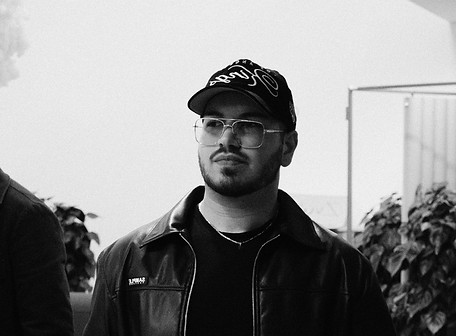
Adrian Biháry
is 25 years old and lives in Trnava, Slovakia. He graduated in screenwriting and directing from the Film and Television Faculty of the Academy of Performing Arts in Bratislava (VŠMU), where he worked on numerous short films during his five years of study. His film Noci a dni (Nights and Days) was selected for PÖFF Shorts and the Kyiv Short Film Festival, and received the Zrnko soli Award. His stories give a voice to young people and explore themes of coming of age and identity in the contemporary world. He is currently developing two projects with Silverart: the feature film Vrany (Crows), based on the novel by Petra Dvořáková, and his directorial short-film debut, Tyranosaurus. He is also writing a feature-length drama for Igor Smitka and collaborating with Věra Lacková.
When he is not writing screenplays or short stories, he works as a copywriter at an advertising agency.

Screenwriter
Robert Poupátko
began his career as an editor of adult films. After meeting director and producer Jiří Sádek, he began writing the screenplay for the film MULO, which tells the story of a demon from Romani folklore. The project successfully received support from the then State Cinematography Fund and is now in active development. During the pandemic, he began developing the project Vlčí bouda (Wolf's Den) with producer Alice Sigmund Heráková. The series is a remake of the classic film by internationally renowned director Věra Chytilová. Although another author eventually took over the work on the screenplay, Robert is still the author of the original story and screenplay. He is currently working with Heráková on a new project, a horror anthology called Hrůzovládci (The Lords of Horror). The first episode, a short film called Oko bouře (Eye of the Storm), has received support from the South Moravian Film Fund, and filming is currently planned for 2027. Robert is also a queer Romani and is actively involved in discussions about inclusion in film. He advocates for better representation of Roma and other minorities in audiovisual media, and his screenplays reflect the diversity of the world around us. He also teaches at Masaryk University and works as a voice actor.

director, producer
Vera Lacková
is a director and producer working in the Czech Republic, Austria, and Slovakia. She is the founder of the production company Media Voice, and her work challenges discrimination against minorities. Her feature-length debut, How I Became a Partisan (Jak jsem se stala partyzánkou, 2021), was nominated in the Best Czech Documentary Film category at the Ji.hlava International Documentary Film Festival.

director, writer and project coordinator
Daniel Kondur
Daniel Hromyko is a Ukrainian film director, writer and project coordinator. Who have been involved in Roma human rights since 2016. He has done many international projects in Ukraine and Europe, cooperating with various NGOs and studios. In 2020 he made a short documentary film together with Ukrainian TV channel "Syspilne" about young Roma in Ukraine that called the "The invisible truth". In 2022 he made a short documentary film "Unknown Friends" about volunteers in Europe when the full scale Russian Invasion on Ukraine began. The film was screened at various film festivals in Italy, France and Armenia. Since 2023 he is actively working with Berlin NGOs regarding Roma culture and art therapy.

Visual artist, illustrator
Maxim Muchow
Based in Rakovník, he is a graduate of the Ladislav Sutnar Faculty of Design and Art at the University of West Bohemia in Pilsen. His work combines figurative painting and drawing with elements of pop art, collage, and street art. He explores themes of identity, his Romani roots, and personal stories, expressing them through bold colours and a distinctive visual language. His work has been exhibited at numerous venues, including in Prague, Pilsen, Ostrava, and České Budějovice.
His artworks are held in private collections in the Czech Republic and Italy, as well as in the collection of the Museum of Romani Culture in Brno. He is the creator of this year’s TUKINO VISIBILITY AWARDS trophies.

Presenter, Project Manager
Nikola Matoušková
was the first Romani woman to win a national beauty pageant. She is a model, presenter, and project manager. Her victory in the beauty pageant opened doors to the worlds of modelling, media, and public events. She gradually expanded her work to include presenting, which has since become one of her main professional activities.
Alongside her presenting work, she works as a project manager and is involved in educating children and young people about prevention.
Working with the younger generation is an important part of both her professional and personal life. In her work, she combines professionalism, energy, empathy, and a natural, engaging presence.
Nikola demonstrates how education, courage, and a willingness to work hard can open up new paths and opportunities.

Violinist, Singer, Actress
Iva Bittová
is a renowned Czech violinist, singer, actress, and composer. She comes from a musical family; her father, Koloman Bitto, was a musician who performed, among other engagements, with the Brno-based Radio Orchestra of Folk Instruments.
She studied music and drama at the Brno Conservatory and, while still a student, worked as an actress and singer at the Husa na provázku Theatre in Brno. She later devoted herself intensively to the violin, Baroque music, and singing. She studied at the Academy of Early Music and earned a bachelor’s degree in Theory and Performance Practice of Early Music and a master’s degree in Musicology at Masaryk University.
Since 2007, she has lived primarily in the United States, where she founded the private voice school Žingora in 2018. Her work brings together her experience in classical, folk, and contemporary music, and she has long been one of the leading figures on the Czech alternative music scene.

Director of ARA ART, actor, documentary
and theater director
Jelena Siladžić
is the director of ARA ART, an organization focused on culture with a significant social impact, education, and promoting the rights of the Roma LGBTAIQ community. He is also an actor and documentary and theater director. He serves as a member of the Government Council for Roma Minority Affairs. David is the founder of the European Roma LGBTAIQ movement. He is a laureate of the Museum of Romani Culture Award (2018) and recipient of the František Kriegel Award for Courage (2019), awarded by Charter 77. In 2019, he was awarded the title of Pride Marshal. He is a member of the prestigious Ashoka Fellows program.

heads the Critical Film & Image Hub at Heidelberg University’s
Dr. Radmila Mladenova
Dr. Radmila Mladenova heads the Critical Film & Image Hub at Heidelberg University’s Research Centre on Antigypsyism. She also co‑leads the research project “Ambiguities of the Audiovisual: ‘Gypsy’ Characters in Feature Films (1895–1950)” within the DFG Research Group “Antigypsyism and Ambivalence in Europe (1850–1950).” A pioneer in the field of visual antigypsyism, Mladenova helped establish the open-access book series Interdisciplinary Studies of Antigypsyism.
Her authored and edited works include Counterstrategies to the Antigypsy Gaze
(heiUP 2024), The ‘White’ Mask and the ‘Gypsy’ Mask in Film (heiUP 2022), and Antigypsyism and Film
(heiUP 2020). Prior to her academic career in Germany, she worked with leading NGOs in Bulgaria to advance human rights and grassroots democracy. She holds a PhD in Slavic Studies from Heidelberg University, alongside degrees from Mannheim University and Sofia
University.

director, Actor, and Educator
Juraj Nvota
Juraj Nvota is a prominent Slovak director, actor, and educator. He studied theatre directing at the Academy of Performing Arts in Bratislava (VŠMU) and, throughout his distinguished artistic career, has worked with numerous leading theatre companies in Slovakia and the Czech Republic.
Since 1993, he has been closely associated with Bratislava’s Astorka Korzo ’90 Theatre, where he has directed numerous successful productions. He also works in film and television directing. His best-known feature films include Kruté radosti (Cruel Joys), Muzika (Music), Konfident (The Confidant), and Rukojemník (The Hostage).
He has received several prestigious awards for his work, including the Igric Awards and the Sun in a Net Awards (Slnko v sieti). Alongside his artistic career, he teaches at the Academy of Performing Arts in Bratislava, where he shares his experience with the next generation of theatre makers.
writer
writer